WonkBlog: When stated abstractly, the risk of the NSA violating your privacy may not seem so alarming. The Associated Press reports on an FBI database that provides some concrete examples of how a massive database about Americans can be abused.
The National Crime Information Center database, maintained by the
FBI, provides law enforcement agencies across the country with
information they need to do their job, including information about
outstanding arrest warrants, gang memberships, firearms records, and
much more. According to the AP, it serves 90,000 agencies and receives 9
million data points every day.
The New York Police Department says one of its detectives was
recently caught using the NCIC database to secretly obtain personal
information about two other NYPD officers. Police officials have suggested
that the man, who also hacked into several individuals’ e-mail
accounts, was trying to figure out “who his ex-girlfriend, also a police
officer, was chatting with.”
Another police officer, Gilbert Valle, was convicted in March for
using the NCIC database to “help compile dossiers on women that listed
their birthdates, addresses, heights and weights,” apparently as part of
a “bizarre plot to kidnap, cook and cannibalize women.” Fortunately,
the authorities stepped in before the women he had profiled were harmed.
Now, AP reports that “authorities have accused a Memphis police
officer of using the NCIC database to leak information to a confidential
informant about a watch dealer who the informant believed had stolen a
Rolex; a reserve patrolman in Clarkston, Ga., of running names and
license plates for marijuana dealers; a Montgomery County, Md., officer
of running checks on cars belonging to a woman who later reported that
the vehicles had been vandalized; and a Hartford, Conn., police sergeant
of supplying database records to a woman who used them to harass her
ex-boyfriend’s new girlfriend."
In short, not everyone with access to private information is a good
person. Those examples are just the ones we know about. Obviously, we
have no way of knowing how many people abused the system and got away
with it.
"All of your personal data is in the hands of the same people that run the TSA, the IRS and likely the DMV,"
explains author Peter Van Buren.
“Do you trust all of them all the time to never make mistakes or act on
personal grudges or political biases? Do you believe none of them would
ever sell your data for personal profit ever? In fact, the NSA is
already sharing your data with, at minimum,
British intelligence. That’s a foreign government that your American government is informing on you to, FYI."
Van Buren also explains that even if you trust completely the people
overseeing the NSA right now, those people won’t be around forever — but
that data will. The
Electronic Frontier Foundation reminds us
that the NSA’s history shouldn’t inspire trust. It was the NSA’s abuse
of domestic surveillance that resulted in FISA — which George W. Bush
basically ignored. Those who don’t learn from the past…
Nixon resorted to burglary to get information and stay in power, how
much more tempting must it be to access information without resorting to
breaking into the Watergate Hotel? And the temptation isn’t just for
the president, As we see with the NCIC database, the danger of abuse
exists with every person involved. If it can be abused, it will be
abused. It’s simply human nature.
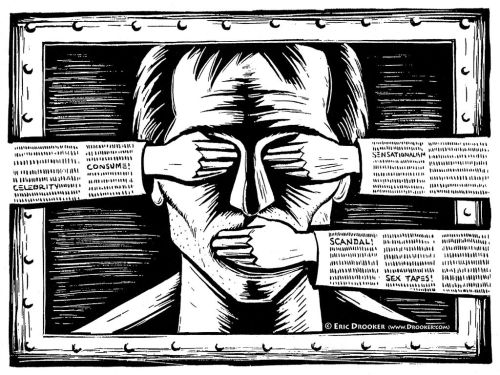
[
image by JefferyTurner]